
How to Get a Mayor’s Permit in Davao: BPLO Walkthrough
How to get a Mayor’s Permit in Davao? Officially called a Business Permit, is the local government license that authorizes your business to legally operate within Davao City. Whether you are opening a sari-sari store in Buhangin or incorporating a company in Damosa IT Park, you need one. The permit is issued by the Business Bureau (also referred to as the Business Permits and Licensing Office or BPLO), located at the Ground Floor of the Sangguniang Panlungsod Building, San Pedro Street. It is valid for one calendar year and must be renewed every January. If you are still in the planning stages, the permit sits in the middle of the registration chain: you register your business name with DTI or SEC first, then secure the Mayor’s Permit, then complete your BIR registration (see also BIR Form 1901). Understanding how to get a mayor’s permit in Davao saves you wasted trips, surprise fees, and the 25% late penalty.
How to Get a Mayor’s Permit in Davao and Who Needs One?
Every person or entity that establishes, operates, or maintains a business in Davao City must secure a Business Permit from the City Government. This covers sole proprietors, partnerships, corporations, cooperatives, and labor associations. There is no revenue threshold below which the permit becomes optional. If you conduct business within city limits, the permit is mandatory.
The Business Bureau standardizes all business establishments operating in Davao City. Since 2004, it has run a Business Permit One-Stop Shop (BPOSS) during the January renewal period, consolidating the City Treasurer’s Office, the Bureau of Fire Protection, the Office of the City Building Official (OCBO), and other regulatory offices under one roof so you do not have to hop between buildings.
The permit itself serves several purposes. It is your proof of regulatory compliance at the local level, a prerequisite for BIR tax registration, and often a requirement for opening a business bank account or signing commercial leases. Operating without a valid permit can result in closure orders and fines.
Required Documents Before You Go to BPLO
The documents you need fall into two piles: one for new applications and one for renewals. Missing even one item means going home and coming back, so verify your complete set before heading to City Hall. The Business Bureau publishes its official documentary requirements on its downloads page, and the list below reflects what the city government currently requires.
| Requirement | New Application | Renewal |
|---|---|---|
| Government-issued ID (owner and authorized representative) | Required | Required |
| DTI Certificate (sole proprietor) or SEC Registration (corporation/partnership) | Required | Not required (already on file) |
| Business location map (Google Map or sketch) | Required | Not required |
| Lease contract or proof of ownership (tax declaration / land title) | Required | Not required (unless address changed) |
| Special Power of Attorney / Secretary’s Certificate / Board Resolution | Required (for representatives and corporations) | Required |
| Certified list of employees (or certification of no employee) | Required | Required |
| BIR Form 2551Q (Quarterly Percentage Tax Return) | Not required | Required |
| Audited Financial Statement | Not required | Required |
| Fire Safety Inspection Certificate (FSIC) | Required (if applicable) | Required |
| Barangay Clearance / Certification | Required (from barangay where business operates) | Required only if flagged or “blocked” |
Barangay Clearance: The First Bottleneck
Before you can apply at the Business Bureau for a new permit, you must secure a Barangay Clearance from the barangay where your business is physically located. Bring your DTI or SEC registration, a valid ID, and proof of your business address (lease contract or tax declaration). Processing typically takes one to two days, but timelines vary by barangay. Some barangay halls process clearances on the spot; others require you to return after a day or two. Factor this into your schedule before you even think about lining up at City Hall.
For renewals, the Business Bureau only requires barangay certification if your application is “blocked,” meaning a flag has been raised on your record. This reduces the barangay visit to an exception rather than the rule for existing businesses.
Fire Safety Inspection Certificate (FSIC)
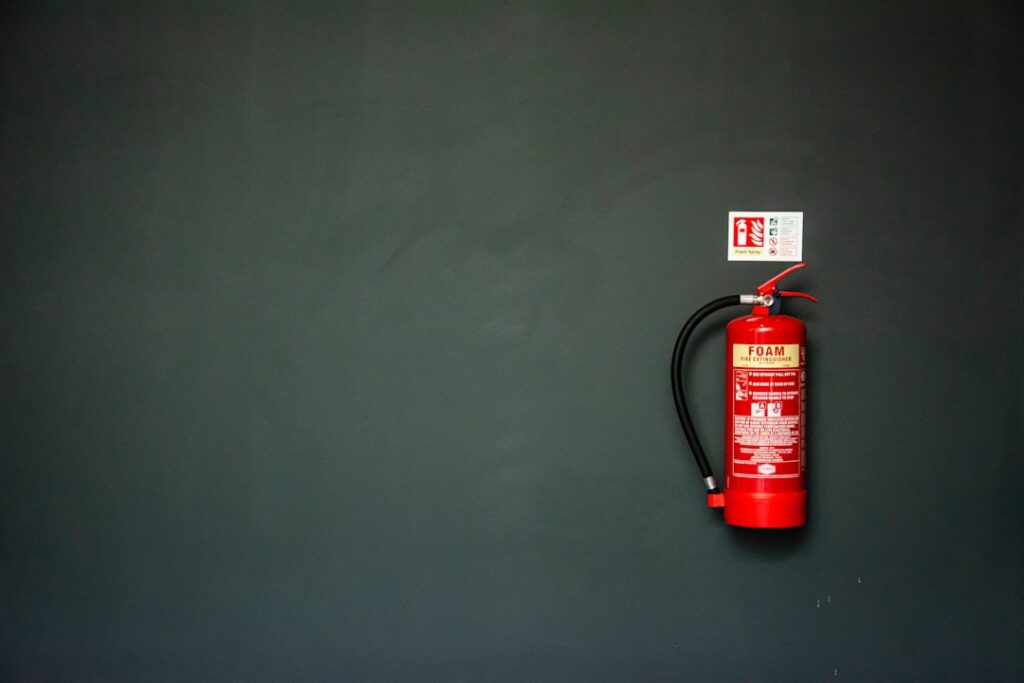
The FSIC is issued by the Bureau of Fire Protection (BFP), not by the Business Bureau. For businesses with a valid occupancy permit, the BFP’s published processing time is a maximum of one working day. Without a valid occupancy permit, the BFP must conduct a physical fire safety inspection, and processing extends to a maximum of three working days. If your establishment has fire code violations, the BFP issues a Notice to Comply (NTC) instead of an FSIC, and you must fix the deficiencies and request a re-inspection before the certificate is released.
This is one of the most common reasons permit applications stall. Fire extinguishers past their service date, blocked exit routes, missing emergency exit signs, and absent smoke detectors in required areas are frequent findings. If your business involves food service, retail with high foot traffic, or warehousing of flammable goods, schedule a pre-inspection self-check before applying.
The BPLO Step-by-Step Process
Davao City has moved most of the application process online through the Business Permit and Licensing System (BPLS) portal. You can file, upload documents, and pay without visiting City Hall. However, during the January renewal rush, the Business Bureau also operates in-person BPOSS sites where all regulatory offices are consolidated in one location. Here is the order you will follow for each scenario.
New Application: Online Pathway
The Business Bureau lists the following steps for securing a new Mayor’s Permit through its online portal:
- Fill out the online application form at appbts.davaocity.gov.ph and attach scanned copies of all required documents (DTI or SEC registration, lease contract or proof of ownership, location map, government IDs, certified employee list, and SPA or Secretary’s Certificate).
- Wait for a call from the Business Bureau for confirmation and verification of your submission. A staff member will review your documents and contact you if anything is missing or unclear.
- Pay your business tax at the City Treasurer’s Office or through the online payment channel. The assessment is generated based on your declared capitalization and business type.
- Monitor your application progress through the portal. If your business requires inspections (fire safety, sanitary, zoning), these are coordinated while your application is pending.
- Print your Mayor’s Permit from the portal or via the link sent to your email once the application is approved and fees are settled.
New Application: Onsite Pathway
If you prefer to file in person, or if your application requires inspections that are easier to coordinate face-to-face, the onsite process follows this window order:
- Business Permit Office (Window 1): Submit your accomplished application form and complete document set. Personnel check your documents, encode your business details into the system, and issue a Business Identification Number (BIN) slip.
- License Division, City Treasurer’s Office (Window 2): Present your BIN slip. The licensing officer computes your business tax and regulatory fees, then issues the License and Regulatory Fees (LRF) form.
- Cashier (Window 3): Pay the assessed fees. The cashier validates the LRF form, which serves as your Official Receipt.
- Business Permit Office (return to Window 1): Present your Official Receipt. After verification, personnel generate the Business Permit, which is released after it is signed by the Business Bureau director.
Renewal Process
Renewals follow a streamlined version of the same flow:
- Register your email address on the BPLS portal to receive an access code. This links your existing business record to your online account.
- Review your information and attach the required renewal documents: BIR Form 2551Q, Financial Statement, SPA or Secretary’s Certificate, government IDs, FSIC, and certified employee list (or certification of no employee).
- Pay your business tax at the City Treasurer’s Office or online. Renewal fees are based on your gross sales or receipts from the preceding year, not your original capitalization.
- Monitor and print your renewed permit through the portal once approved.
Common Hold-Ups at BPLO
Even with a complete document set, several things can slow your application:
- Barangay clearance delays: Some barangay halls have limited staff or irregular processing schedules. If your application is flagged as “blocked” during renewal, you will need to resolve the issue at the barangay hall before the Business Bureau can proceed.
- FSIC deficiencies: The BFP may issue a Notice to Comply instead of an FSIC if fire safety violations are found. You must correct the issue and request a re-inspection, which can add several days.
- OCBO requirements: The Office of the City Building Official may flag missing occupancy permits, building permits, or unresolved renovation approvals. Business Bureau OIC Maribel Paguican has specifically noted that OCBO deficiencies are a common cause of processing delays during renewal season.
- Mismatched business details: If your business name, address, or ownership structure on your DTI or SEC registration does not match what is on file with the Business Bureau, the system will flag the discrepancy and you will need to file for correction or amendment first.
- Incomplete employee list: The certified list of employees must be current. Submitting an outdated list or failing to include the certification of no employee (if applicable) will send you back to step one.
Fees and Processing Timeline
Business permit fees in Davao City are not flat. They are computed by the City Treasurer’s Office based on your business classification, capitalization (for new applications), or gross sales and receipts from the preceding year (for renewals). The total amount you pay combines several components.
Fee Components
Under Davao City’s tax ordinance, business tax rates vary by sector. For retailers, the city imposes 2% of gross sales on the first ₱400,000 and 1% on gross sales exceeding ₱400,000, per the Local Government Code ceilings. Other business categories (wholesale, manufacturing, contracting, services) have their own rate schedules. Beyond the business tax itself, expect the following regulatory fees:
| Fee Component | Estimated Range | Basis |
|---|---|---|
| Mayor’s Permit Fee | Varies | Business type and capitalization (new) or gross sales (renewal) |
| Business Plate / Sticker | ₱300 to ₱500 | Flat fee, mandatory for display |
| Sanitary Permit | ₱300 to ₱1,000 | Required for food and health-related businesses |
| Fire Safety Inspection Fee | ₱500 to ₱3,000 | Computed based on gross sales or floor area |
| Barangay Clearance | ₱500 to ₱1,000 | Set by the barangay where the business operates |
| Late Renewal Surcharge | 25% of total fees | Applied if renewal is filed after January 31 |
The fee ranges above are estimates compiled from Davao City’s published tax ordinance and third-party legal sources. Actual amounts depend on your specific business classification, declared gross sales, and the barangay’s fee schedule. Always verify the current computation with the City Treasurer’s Office or the Business Bureau directly.
Processing Timeline
For a new application with complete documents and no inspection deficiencies, expect roughly 3 to 10 working days from submission to permit release. The timeline breaks down like this:
| Stage | Estimated Duration |
|---|---|
| Document submission and verification | 1 to 2 working days |
| Fee assessment and payment | Same day (onsite) or 1 day (online) |
| Fire safety inspection (if no occupancy permit) | Up to 3 working days |
| Sanitary / zoning inspection (if applicable) | 1 to 3 working days |
| Permit generation and signing | 1 to 2 working days |
Renewals filed during the January BPOSS period are generally faster, since all offices are consolidated in one location and most businesses already have their records on file. Expect 1 to 3 working days for a clean renewal with no deficiencies, longer if the BFP or OCBO needs to inspect your premises.
Renewal Season: Why January Matters
Davao City’s annual business permit renewal window opens in early January and closes on January 31. For 2026, the city government scheduled renewals from January 5 to 31, operating Mondays through Saturdays at the Sangguniang Panlungsod Building and Almendras Gym from 8 AM to 10 PM, with additional satellite sites at Gaisano Grand Citygate Mall and district treasury offices in Calinan, Bunawan, Toril, Tugbok, Paquibato, Marilog, and Baguio. File after January 31 and you will incur a 25% surcharge on top of your total fees, plus any applicable interest charges.
The Business Bureau reported over 37,000 permit renewals by late January 2025, representing roughly 80% of expected renewals. That means thousands of businesses file in the final days, and queues at the BPOSS sites grow correspondingly. Filing in the first two weeks of January, when foot traffic is lighter, can save you hours of waiting.
Preparing for Renewal Season
Start gathering your renewal documents in December, not January. Your BIR Form 2551Q (quarterly percentage tax return) and audited Financial Statement should already be in your files. The FSIC, however, often needs to be renewed, and the BFP inspection process can take up to three working days if your occupancy permit is not on file. If you wait until mid-January to start the FSIC process, you risk missing the January 31 deadline.
Also check whether your business has any flags from the OCBO. Unresolved building permit issues, unauthorized renovations, or missing occupancy certificates can block your renewal. The Business Bureau has noted that OCBO deficiencies are a leading cause of delayed processing during renewal season, so clearing these early is critical.
If your business has ceased operations, do not simply let the permit lapse. The Business Bureau advises formally filing for business retirement to avoid accruing taxes and penalties on a business you no longer run.
Securing a Mayor’s Permit in Davao is a sequential process with clear steps, but the hold-ups are predictable: barangay delays, fire safety findings, and OCBO requirements. Prepare your documents early, file online when possible, and target the first two weeks of January for renewals to avoid the last-minute rush. If you are also working through business registration in Davao from start to finish, the Mayor’s Permit is the local government step that bridges your DTI or SEC registration with your BIR tax compliance. Have questions about navigating the BPLO or finding a local consultant to help with the process? Davao Corporate is here to help you move forward with confidence.